
How to Treat Sore Wrists Without Making Them Worse
That ache on the thumb side after a long day of typing. The stiff, cranky feeling after gardening, lifting groceries, working in the shop, or holding a grandbaby. Sore wrists can turn ordinary work into a real nuisance fast. Knowing how to treat sore wrists starts with one simple rule: do not try to tough-guy your way through pain that is getting sharper, weaker, or more constant.
Most wrist soreness settles down when you give it a little common sense, a little support, and a break from whatever stirred it up. But wrists are complicated little workhorses packed with bones, tendons, ligaments, and nerves. The right move depends on whether you are dealing with simple overuse, a strain, arthritis, nerve irritation, or an injury that needs a professional look.
Start by Figuring Out What Set It Off
A sore wrist after assembling furniture, raking leaves, painting, weight training, or a weekend of computer work is often an overuse problem. The tissues have been asked to do the same thing too long, too hard, or at a weird angle. That does not mean you did anything foolish. It means your wrists have sent up a flare that says, "Hey, ease up for a minute."
Notice where the discomfort lives. Pain at the base of the thumb may come from repetitive gripping, lifting, or scrolling. Tingling, numbness, or burning into the hand can point to nerve irritation. A deep ache with morning stiffness may be more common with arthritis. Swelling, bruising, a pop, or pain after a fall is a different animal altogether.
You do not need to diagnose yourself at the kitchen table. You do need to pay attention. The details help you choose a sensible first step and help a clinician if the problem refuses to quit.
How to Treat Sore Wrists at Home
For mild soreness without a major injury, reduce the activity that is aggravating it for a few days. That is not the same as parking yourself on the couch forever. It means changing the motion, shortening the task, taking breaks, or using the other hand when you can.
If keyboard work is the culprit, keep your wrists as straight as possible rather than bent upward or down. Move the keyboard closer, lighten your grip on the mouse, and take a 30-second hand break every half hour. If yardwork or tool use lit up your wrists, switch hands when possible, use a larger handle or padded grip, and stop before pain turns into a full-blown protest.
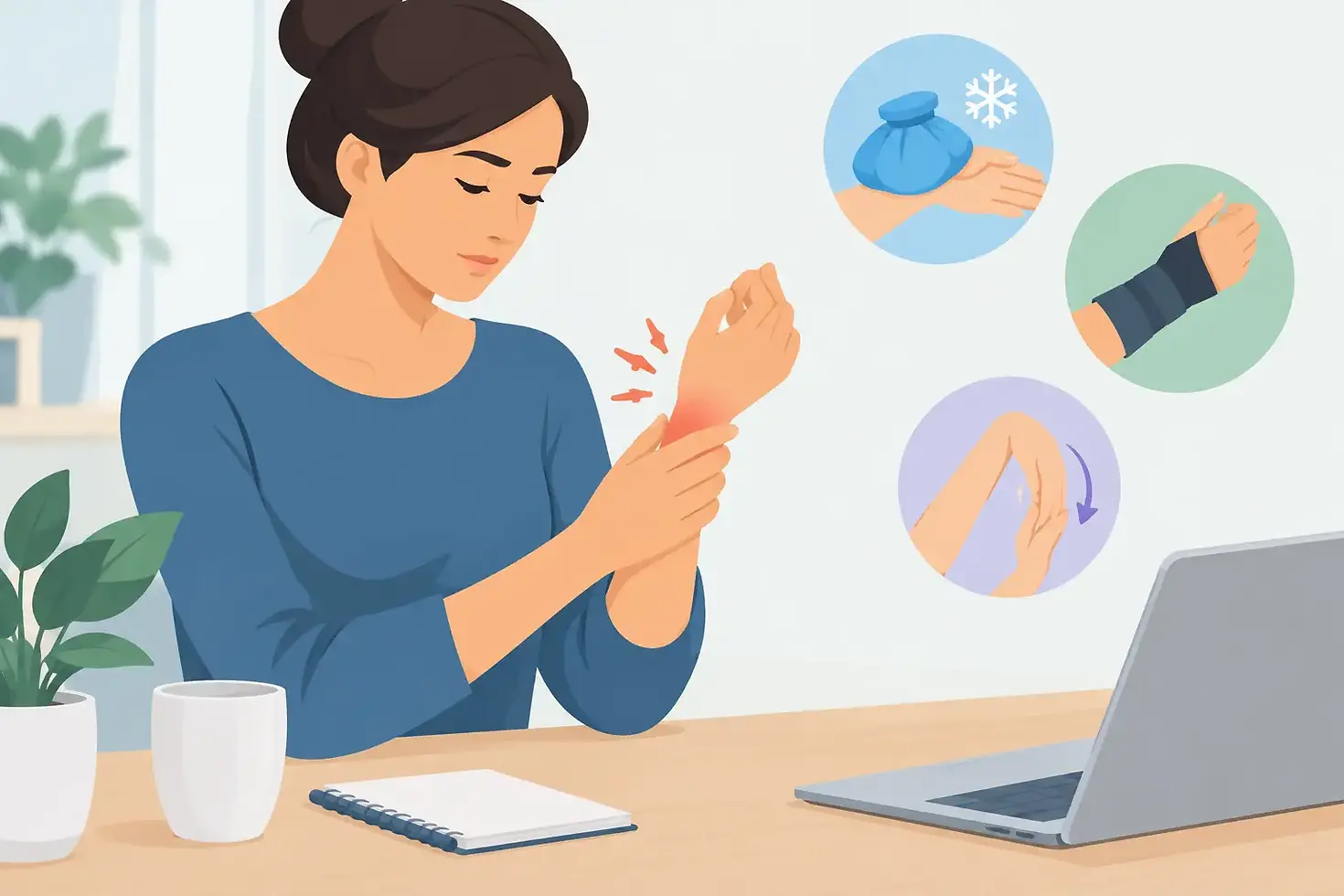
A removable wrist brace can be useful for short-term support, especially during sleep or the activity that triggers symptoms. The goal is to keep the wrist in a neutral, relaxed position, not squeeze it into submission. A brace that causes tingling, discoloration, or more pain is too tight or not the right fit.
Use cold for fresh irritation and heat for stiffness
Cold can be helpful when the wrist feels hot, puffy, freshly irritated, or sore after a hard day of use. Wrap an ice pack or bag of frozen peas in a thin towel and use it for about 10 to 15 minutes at a time. Do not put ice directly on skin, and do not fall asleep with it on.
Heat often feels better when the problem is stiffness, especially first thing in the morning or before gentle movement. Try a warm shower, warm washcloth, or heating pad on a low setting for 10 to 15 minutes. Heat should feel soothing, not scorching. If it makes swelling worse, go back to cold or skip it.
Some folks need cold. Some swear by heat. Some switch between them depending on the day. Your wrist gets a vote here.
Keep gentle movement in the picture
Complete stillness can make a sore wrist feel stiffer. Once sharp pain and swelling have calmed down, use easy, pain-free motion a few times a day. Slowly open and close your hand, rotate your forearm palm-up and palm-down, and gently bend the wrist forward and back.
Keep the range small at first. Stretching should feel like a mild pull, never a stab, burn, or electric zing. Do not force the wrist backward to "work through it." That is how a manageable flare-up becomes a longer vacation from the things you enjoy.
A simple test is what happens later that day and the next morning. If your wrist is substantially angrier after an activity or stretch, you did too much. Back off, then build up more gradually.
Topicals Can Be a Handy Part of Your Routine
A topical rub can be a practical option when you want targeted comfort without making a big production out of it. Massage a small amount around the sore muscles and soft tissues of the wrist and forearm, following the product directions and keeping it away from broken skin, eyes, and sensitive areas.
The forearm matters more than people think. Muscles that move your fingers and wrist run up into the forearm, so a tight, overworked forearm can keep pulling on the wrist all day long. Gentle massage there can feel mighty good after repetitive work.
Dave's Miracle Muscle Rub is a CBD-free, water-based option for customers who prefer a non-greasy topical approach. As with any new personal-care product, try a small patch first if you have sensitive skin, and stop using it if irritation shows up. A topical may help you feel more comfortable, but it should not be used to ignore worsening pain or push through an injury.
Stop the Same Soreness From Coming Back
The fastest way to get stuck in a wrist-pain loop is to feel better for one afternoon and jump straight back into the same overloaded routine. Give your wrists a better deal.
For repetitive work, use shorter rounds with real breaks instead of one long marathon. Keep tools, phone screens, and keyboards positioned so your wrists stay closer to straight. Grip things firmly enough to control them, but not like you are trying to crush walnuts. If you lift weights, ease back into pushing movements, planks, curls, or heavy gripping with lighter loads and clean form.
Strength matters too, once pain is settling down. Gentle hand squeezes with soft putty or a rolled towel, light forearm exercises, and gradual return to normal activity can help build tolerance. The keyword is gradual. Your wrist does not care that you have a garage to clean, a quilt to finish, or an entire yard that needs attention by Saturday.
If arthritis is part of the picture, warmth before activity and frequent motion breaks can be especially useful. If you spend hours at a desk, an ergonomic setup can help, but fancy gear is not magic. A simple adjustment in chair height, keyboard position, or mouse grip can make a bigger difference than an expensive gadget collecting dust.
When Wrist Pain Needs Medical Care
Home care is for mild soreness, not every wrist problem under the sun. Get urgent medical attention after a fall, car accident, crush injury, or any injury that leaves the wrist misshapen, severely swollen, bruised, or impossible to move. Do not assume you "just sprained it" if you cannot grip, bear weight, or use the hand normally.
Call a healthcare professional promptly if you have numbness, persistent tingling, weakness, fingers that look pale or blue, increasing redness or warmth, fever, or pain that wakes you repeatedly at night. These signs can involve nerves, circulation, infection, or a more significant injury.
It is also smart to get checked if soreness is not improving after a week or two of sensible rest and adjustment, keeps returning, or is interfering with work, sleep, or daily life. A clinician, physical therapist, or hand specialist can sort out whether you need imaging, a different brace, targeted exercises, or another treatment plan.
Your wrists help you cook, create, work, drive, carry, text, and shake hands. Treat them like the hardworking tools they are: listen early, lighten the load, and give them enough care to get back to doing what matters.


Comments